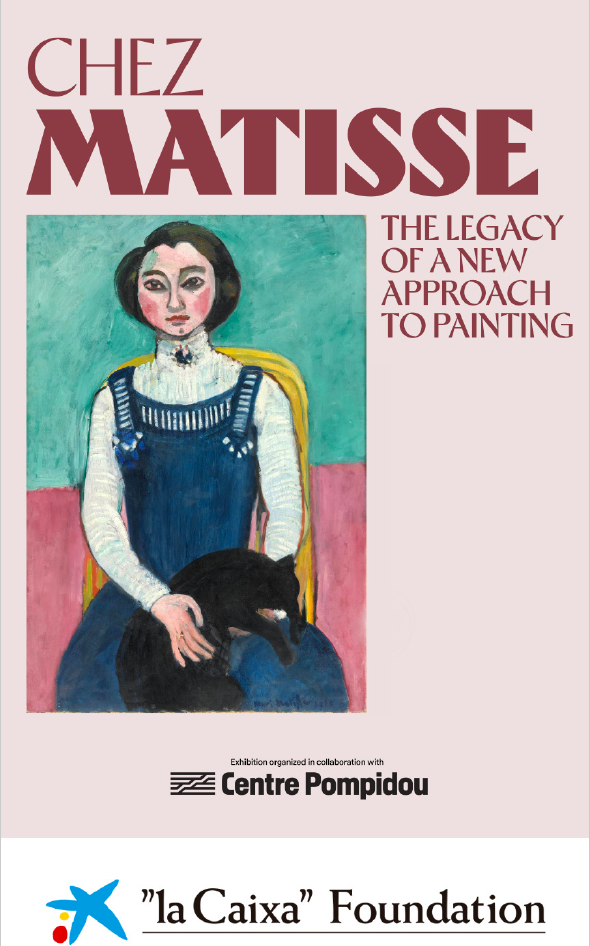

“Modern art is an outburst from the heart,” said Henri Matisse (1869–1954) late in life. A total artist and key figure of modernity, Matisse nevertheless got off to a slow and studious start, a far cry from the precocious flair of an early prodigy like Picasso. Born into a family of weavers and colour merchants from Picardy, he often stressed the tireless effort required to master the complex art of simplicity. As Pierre Schneider aptly wrote, “Matisse would feel the need to touch the ground before taking flight, to acknowledge the weight of things before giving them wings.”
This exhibition sets out to show how Matisse’s work unfolded from his first self-portrait dated 1900 to the final paintings and gouache cut-outs created towards the end of his life with the kind of artistic freedom only granted by true mastery. “I do not paint things, I paint the relationships between things,” he said. Chez Matisse: The Legacy of a New Approach to Painting picks up on this idea by exploring the unique, far-reaching dialogue that his work sparked in 20th-century art. His radically innovative approach to colour and his critical rethinking of a painting as a purely pictorial surface quickly resonated with German Fauves and Russian Neo-Primitivists, as well as American painters in the 1940s. Women artists have brought a different perspective to Matisse’s work: Sonia Delaunay, Natalia Goncharova, Baya, Anna-Eva Bergman and Zoulikha Bouabdellah offer reflections on decorative art, the boundaries of painting and the role of the model and the feminine.
Matisse’s oeuvre is an art of optical sensation that invites multiple responses, both expressive and conceptual, from spectators pondering his revolutionary 1907 equation: “A square metre of blue is bluer than a square centimetre of the same blue.”