'The truth is we see nothing.
Nothing precise. Nothing
definite. We must continually
accommodate our gaze.'
Grégoire Bouillier,
Le Syndrome de l’Orangerie, 2024
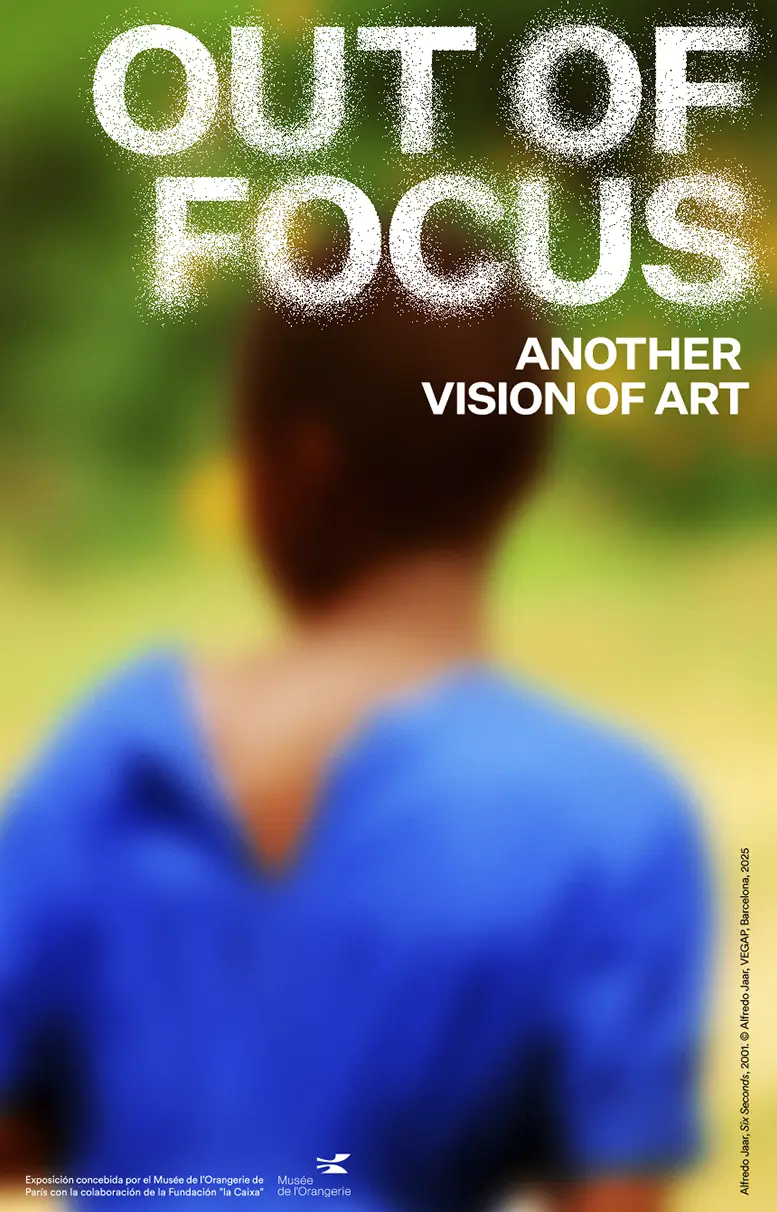
Indeed, this is what we all feel when we find ourselves before Claude Monet's Water Lilies for the first time. The exhibition explores this dimension of the painter's late work as a key to understanding a large part of modern and contemporary art.
The aesthetic of blurriness took root and developed in the ruins of the aftermath of World War Two. The principle of visual clarity which had long prevailed in art now seemed superfluous. When the certainties of the visible begin to fade and countless new possibilities emerge, artists explore new approaches and address transience, disorder, incompleteness and doubt. In response to profound upheavals in world order, they turn to the indeterminate, the indistinct and the allusive. Their works no longer need to be well defined and leave greater room for viewers' interpretations.
Inherently elusive, blurriness invites us to step to one side, to pause in our attempts to focus and to explore reality from new points of view. It has become the preferred means of expression for artists in a world where visibility is obscured and instability reigns, more than ever before.